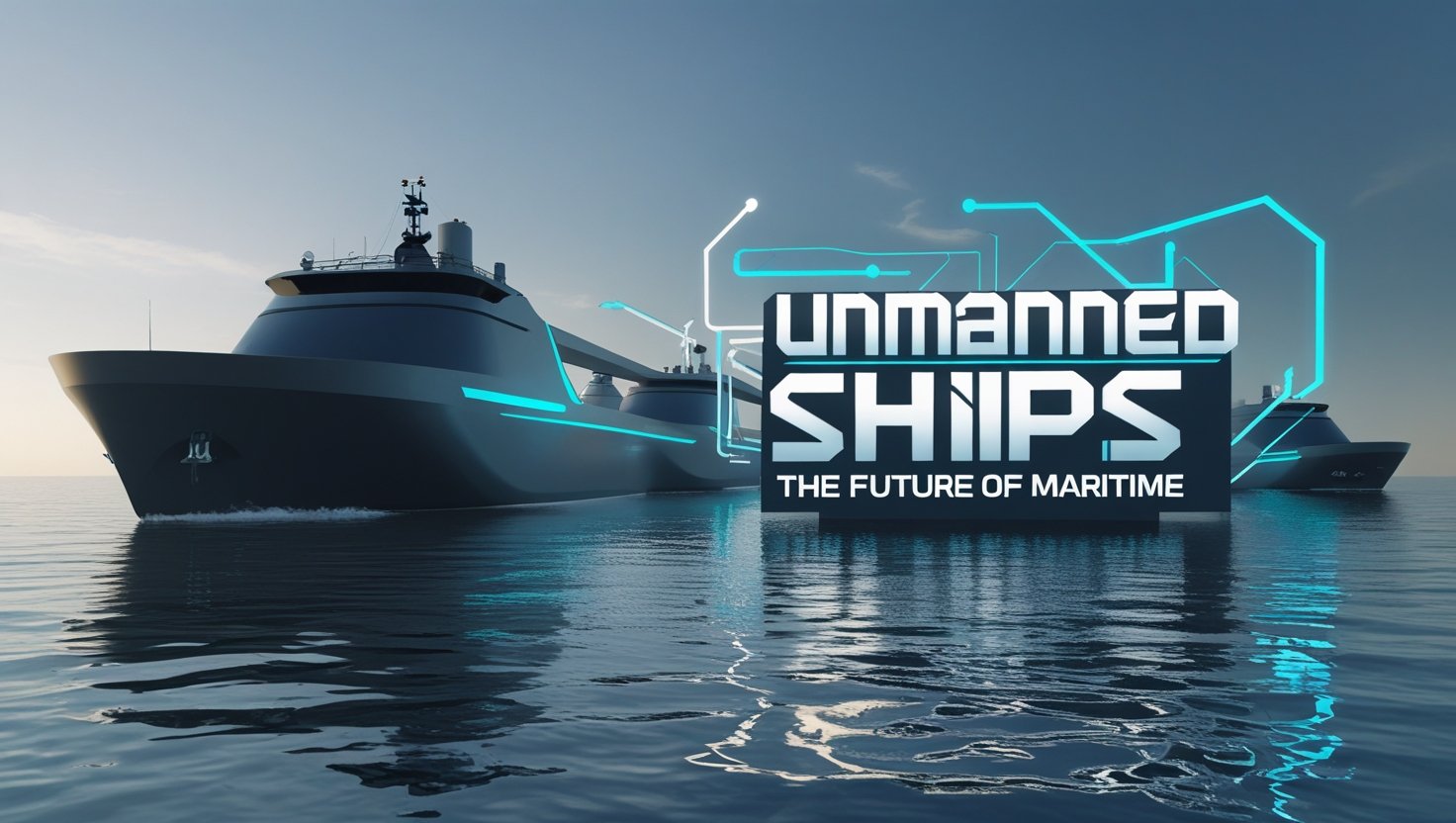
Imagine a vast ocean where the towering bridge and crew quarters of today’s vessels are replaced by sleek hulls guided entirely by artificial intelligence. This isn’t science fiction, it’s the imminent revolution of unmanned ships, reshaping the very definition of maritime transport. From cost savings and safety boosts to greener propulsion and real-time analytics, autonomous vessels are set to chart a bold new course for the maritime industry.
Charting the Course of Change:
For centuries, seafarers relied on wind, wood, and human skill to traverse oceans. Today, the backbone of every journey has shifted to digital navigation, GPS, real-time weather forecasting, and satellite communications. These advances paved the way for unmanned surface vessels (USVs) and fully autonomous container ships. Early trials, like Japan’s Sunflower Shiretoko ferry completing a 750 km autopilot voyage in 2022, proved that unmanned navigation is feasible over long distances. By replacing onboard crews with remote-operation centers and AI decision-making, shipping lines anticipate significant reductions in labor costs, human-error incidents, and scheduling delays.
Yet this transformation isn’t merely about cost savings. It’s a fundamental shift in maritime culture: captains become system supervisors, engineers focus on software updates, and ports evolve into high-tech hubs. The industry that once relied on seafaring lore now looks toward machine learning models to predict wave patterns and optimize routes.
Decision-Making Beyond Human Hands:
At the heart of every autonomous vessel lies a sophisticated orchestration of artificial intelligence, machine learning, and sensor fusion. Radar, LiDAR, sonar, HD cameras, and meteorological sensors feed live data into neural networks that chart courses, detect obstacles, and adapt to unexpected conditions. Unlike crewed ships that depend on human watchstanders, these systems can monitor surroundings 24/7, alert remote operators to anomalies, or, even better, execute evasive maneuvers in milliseconds.
Over time, the AI “learns” from each voyage. By analyzing near-misses, weather shifts, and maintenance logs, self-tuning algorithms continually refine navigation protocols and engine usage. This leads to safer passages in congested waterways, optimized speeds that trim fuel consumption, and predictive maintenance alerts that replace parts before failures occur. In effect, the AI helm evolves into the ultimate co-captain, never fatigued, always vigilant, and relentlessly efficient.
Engineering the Unmanned Ship:
Removing crews from vessels frees designers to rethink everything from hull shape to ballast systems. Without cabins, galleys, or life-rafts, hulls can be narrower, lighter, and more hydrodynamic, reducing drag and cutting energy use. Modular cargo holds interface seamlessly with port robotics, so cranes slot containers precisely without human intervention. Automated mooring arms latch onto docks with laser-guided accuracy, shaving hours off loading times.
Beneath the surface, autonomous submarines, known as autonomous underwater vehicles (AUVs), are charting seabeds, inspecting pipelines, and surveying marine life without sonar-blasting ships overhead. Their specialized thrusters and pressure-hardened casings allow months-long missions, streaming gigabytes of oceanographic data to research labs. Together, USVs and AUVs form a new class of sea drones capable of tasks ranging from deep-sea mining to environmental monitoring.
Sustainable Propulsion for Unmanned Vessels:
The unmanned revolution dovetails with the green shipping agenda. With no crew to worry about noise or emissions below decks, vessels can adopt electric propulsion, hybrid drives, or alternative fuels like hydrogen and ammonia. Large battery banks paired with fuel cells offer silent, zero-emission cruising, ideal for fragile marine habitats and smog-prone port cities. Hybrid systems let diesel generators handle long-range power needs, while electric motors manage low-speed maneuvering.
AI-driven energy management systems monitor power flows in real time, shifting loads between batteries and generators to maximize efficiency. On some prototypes, solar panels and wind-assist sails capture renewable energy, further extending range. By combining unmanned operation with clean propulsion, shipping firms project up to 40% reductions in carbon output compared to traditional vessels. This is a game-changer for meeting the International Maritime Organization decarbonization goals and curbing ocean acidification.
Governing Maritime Autonomy:
Innovation always outpaces regulation, and autonomous shipping is no exception. The International Maritime Organization (IMO) completed a Regulatory Scoping Exercise (RSE) in 2021 to gauge how existing conventions apply to Maritime Autonomous Surface Ships (MASS). Building on that, the IMO aims to adopt a non-mandatory MASS Code by May 2026, laying out best practices for navigation, collision avoidance, cybersecurity, and environmental safeguards.
By 2032, a mandatory MASS Code, likely incorporated into SOLAS (Safety of Life at Sea), will standardize crewless operations worldwide. National authorities will certify remote-control centers and AI steering systems, require fail-safe protocols, and enforce digital logging. Ports, too, must upgrade infrastructure: high-bandwidth fiber, 5G cellular networks, and AI-driven traffic management systems. Only with cohesive, global governance can unmanned ships safely share the seas with fishing boats, cruise liners, and naval vessels.
The Business Case for MASS:
The financial incentives for unmanned ships are compelling. Crew expenses, often the largest single cost for shipping lines, can drop by over 50% when companies eliminate onboard salaries, accommodations, and training. Insurance premiums fall as human-error incidents plummet, and streamlined loading saves days per voyage. Reduced maintenance downtime and predictive parts replacement further drive profitability.
On the revenue side, faster turnaround times mean more voyages per season, higher fleet utilization, and improved customer reliability. Companies investing early in autonomous marine vehicles can command premium freight rates for guaranteed schedules. Meanwhile, smaller operators gain access to shipping lanes previously too costly or risky for crewed vessels, such as Arctic supply routes, disaster-relief corridors, or offshore wind farm support.
Safeguarding Smarter Ships:
An unmanned vessel is a floating datacenter, and like any networked system, it’s a target for cyberattacks. Hackers could spoof GPS signals, inject false sensor readings, or even seize control of propulsion. To counter this, developers integrate end-to-end encryption, blockchain-backed transaction logs, and AI-driven anomaly detection. Every command, from course adjustments to cargo manifest updates, is authenticated and time-stamped.
Physical safety remains paramount, too. Redundant hardware, multiple autopilot units, backup power buses, and emergency anchoring systems ensure vessels default to a safe-stop mode if control links fail. Remote operators oversee fleets in control rooms, ready to intervene manually. Onboard drones and robotic arms perform hull inspections, patch minor damage, or deploy life rafts in the rare event of a flood. With these layers of defense, unmanned ships can rival, and potentially exceed, the safety records of their crewed counterparts.
Conclusion:
The age of unmanned ships is no longer on tomorrow’s horizon, it’s taking shape in shipyards, test ranges, and control centers today. By melding AI nav-systems, lightweight hulls, green propulsion, and robust regulations, the maritime industry stands poised for a leap in efficiency, safety, and sustainability. As the IMO finalizes the MASS Code and prototype fleets traverse open waters, the question shifts from “if” to “how fast.” One thing is certain: the next engine room will be a server rack, and captains of tomorrow will earn their stripes in virtual control rooms ashore.
FAQs:
1. What exactly is an unmanned ship?
An unmanned ship operates without an onboard crew, using AI, sensors, and remote-control centers to navigate and manage systems.
2. Are unmanned ships safer than traditional vessels?
They reduce human-error risks but require advanced cybersecurity and redundant fail-safes to match or exceed crewed safety records.
3. When will autonomous cargo ships become mainstream?
Early commercial routes may start in the late 2020s, with broad deployment and regulatory alignment by the early 2030s.
4. How do unmanned vessels handle severe weather?
AI models ingest real-time meteorological data to reroute or seek shelter; if conditions exceed safety thresholds, vessels enter standby modes.
5. Do unmanned ships eliminate all crew jobs?
They shift roles: seafarers become shore-based operators, maintenance technicians, and software supervisors rather than live-aboard crews.
6. What fuels power uncrewed ships?
Electric batteries, hydrogen fuel cells, hybrid diesel-electric systems, and emerging low-carbon options (LNG, ammonia) enable zero-to-low-emission voyages.