Grass Courts | The Hidden Test for Tennis Legends
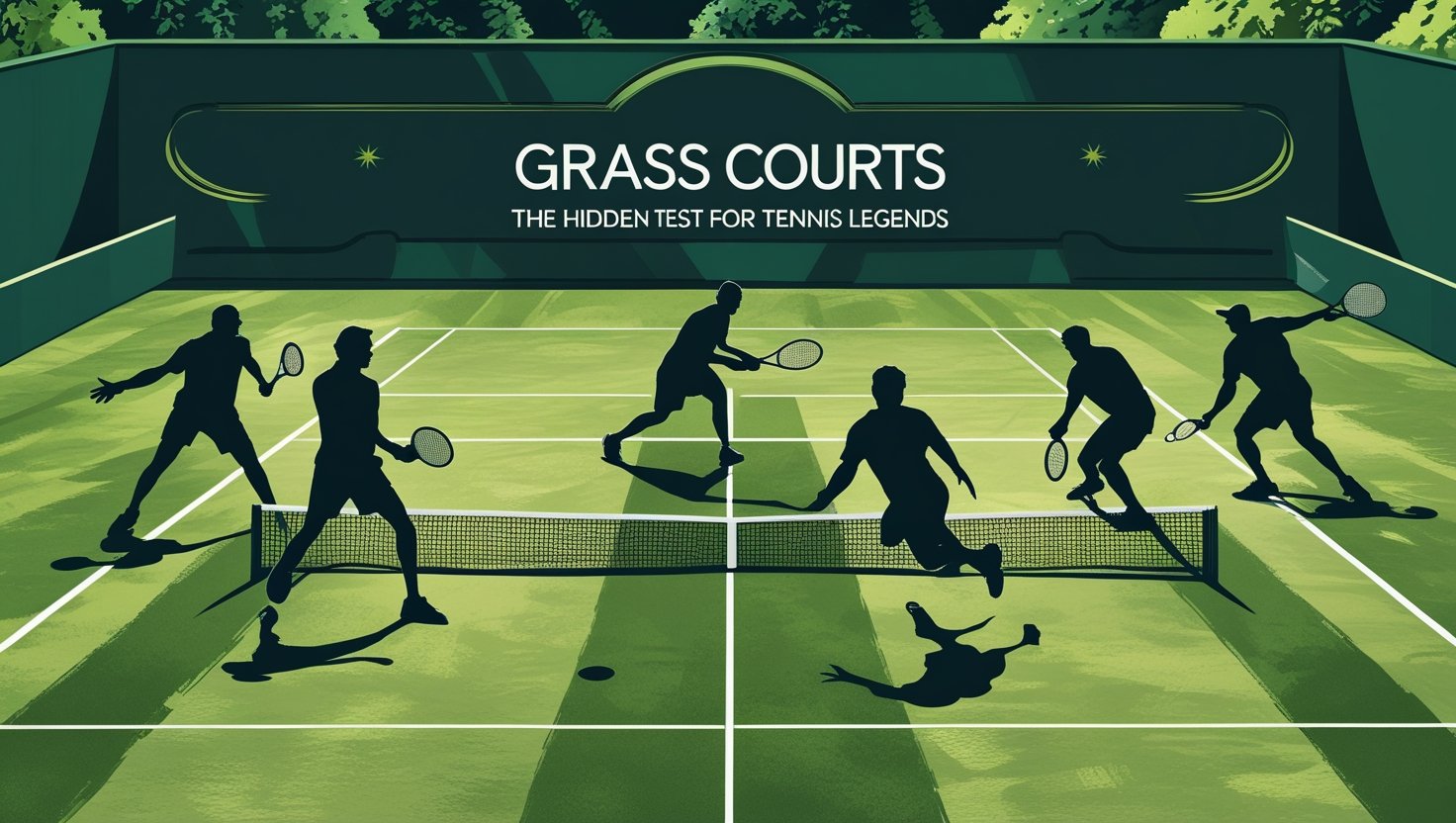
Imagine chasing a lightning-fast ball as dew-kissed grass whispers underfoot, a challenge so unique it separates all-time greats from the rest. Grass courts are where raw power meets delicate finesse, and every point becomes a duel with both nature and opponent.
The Origins of Grass Court Tennis:
Grass courts trace back to Victorian England, where Major Walter Clopton Wingfield’s 1874 “lawn tennis” invention transformed a garden pastime into a global sport. By 1877, Wimbledon crowned its first champions on manicured turf, setting an enduring standard. These grass courts encapsulate tradition: the vivid green surface, meticulously mowed, demands players honor the sport’s roots while mastering its quirks. Unlike clay or hard courts, grass brings history under every sneaker, reminding competitors that they’re part of a lineage of champions.
How Footing on Grass Demands Respect:
- Slippery Surface: Morning dew and closely cropped blades can turn a routine sprint into a cautious slide.
- Rapid Direction Changes: Turf offers less traction, forcing players to plan footwork with surgical precision.
- Risk of Injury: An unexpected turn can twist ankles or send players sprawling, underscoring the need for strength and balance.
- Adapted Slides: Unlike clay slides, grass slides are less graceful but equally strategic, used sparingly to reach drop volleys.
Mastering footing on grass is akin to learning a new language: one mispronounced step and the conversation with the turf falters.
Ball Behavior on Grass:
Grass courts reinvent every stroke. The combination of low friction and dense blades means the bounce is:
- Lower: Balls skid rather than pop, forcing players to stay low.
- Faster: Serves and groundstrokes zip through the court, rewarding aggression.
- Unpredictable: Tiny divots or uneven patches can yield quirky hops, turning a routine rally into a test of reflexes.
This dynamic urges athletes to sharpen instincts and favor short, explosive points, every millisecond counts when the ball hugs the turf.
Crafting the Perfect Grass Court Arsenal:
On grass, the serve reigns supreme. A potent first delivery can yield free points, while an ace feels almost poetic as it zips past stretched opponents. But it’s not just power, it’s variety: slice serves that curve away, flat bombs down the T, and kick serves that surprise even the keenest returners.
Beyond serving, champions deploy:
- Sharp slice backhands that stay low and skid past the baseline.
- Volleys executed at the net, capitalizing on short rallies.
- Drop shots that exploit the court’s quickness, leaving adversaries stranded.
This arsenal transforms the grass court into a magician’s stage, where every shot must blend precision, deception, and timing.
Icons Who Conquered the Turf:
- Martina Navratilova: Nine Wimbledon singles titles, unmatched net play, and razor-sharp slices.
- Roger Federer: A silky forehand and effortless movement that made grass look like an extension of his will.
- Pete Sampras: Seven Wimbledon crowns, his booming serve dominating every lawn duel.
- Serena Williams: Power, precision, and athleticism that redefined women’s grass-court tennis.
- Boris Becker: Teenage champion whose fearless style brought serve-and-volley back into vogue.
These legends didn’t just win on grass, they reimagined how tennis could be played on its fastest stage.
Maintaining a Championship-Level Lawn:
Behind every grand slam lies hours of agronomic artistry. Groundskeepers perform a daily ballet:
- Mowing: Grass cut to just 8mm, ensuring uniform bounce and speed.
- Rolling: Soil compacted to support fast play without turning the surface brittle.
- Watering: Balancing moisture to prevent slipperiness while keeping plants healthy.
- Fertilizing: Nutrients are applied to foster dense growth and resilience against heavy foot traffic.
This ceaseless upkeep transforms turf into a championship-grade grass court surface, marrying science and tradition in every blade.
Shoes and Strings for the Grass Guru:
Grass demands a specialized kit. Players typically choose:
- Pimpled-sole shoes that disperse pressure and grip soft turf.
- Lower-cut models for better agility and quick pivots.
- Tensioned strings (often polyester blends) to add bite and control on skidding shots.
- Softer racket frames to absorb shock and optimize feel on fast exchanges.
These tweaks may seem minor, but on grass, even a small advantage can tilt a match.
Tactical Shifts from Clay to Lawn:
Switching from clay to grass is like switching careers. Points must be shortened, footwork retooled, and patterns reversed:
- From Defense to Offense: Clay grinders must adopt a more proactive style, seizing initiative early.
- Court Positioning: Staying closer to the baseline invites shorter rallies, essential on turf.
- Shot Selection: High topspin loops give way to flat, penetrating strokes that skim the grass court.
Mental agility rivals physical adjustments, players must embrace the turf’s opportunistic nature and act on instinct.
Grass Court Tournaments That Test the Elite:
While Wimbledon reigns supreme, a handful of other events sharpen champions for lawn glory:
- Queen’s Club Championships (London): A proving ground where serve-and-volley tactics thrive.
- Halle Open (Germany): A sprint of long rallies and swift transitions.
- Eastbourne International (UK): A strategic prelude where champions refine grass-court form.
Each tournament offers a different slice of grass-court nuance, pushing players to adapt quickly before the sport’s oldest major.
The Future of the Lawn:
Grass-court tennis is evolving. Hybrid turf mixes promise more durable surfaces, reducing maintenance without sacrificing authenticity. Smart irrigation systems and soil sensors optimize moisture levels in real time. Data-driven line-marking drones ensure flawless boundaries. Even sustainable grass strains are under development, aiming to lower water usage and chemical inputs.
As technology melds with tradition, grass courts will remain a test of pure skill, enhanced by science but never diminished in their storied challenge.
Conclusion:
Grass courts occupy a unique corner of tennis lore: a fast, unpredictable arena demanding precision, power, and adaptability. From the first serve’s hiss to the final volley’s clinch, each match on turf is a dialogue between athlete and earth. Legends are forged not just by winning points but by decoding the slippery script of the grass itself. Whether you’re an aspiring pro or an avid fan, embracing the hidden tests of grass courts reveals tennis at its most elemental, a sport where every blade of grass matters.
FAQs:
1. Why are grass courts considered challenging?
Grass courts are slippery, produce low bounces, and demand quick reflexes, making footing and shot timing more difficult than on other surfaces.
2. What type of grass is used for tennis courts?
Most championship lawns use creeping red fescue, valued for its dense, low-growing blades and consistent play characteristics.
3. Which shoes are best for grass-court play?
Grass-court shoes feature pimpled soles and low profiles to maximize traction and stability on the slippery surface.
4. Why do tennis balls skid on grass?
The grass’s smooth, low-friction blades prevent the ball from bouncing high, causing it to skid and favoring fast, attacking play.
5. Who has won the most Wimbledon singles titles?
Martina Navratilova holds the record with nine women’s singles titles, while Roger Federer and Pete Sampras each won seven in the men’s draw.
6. How often must grass courts be maintained?
Top-tier grass courts require mowing every 2–3 days, plus regular rolling, watering, aeration, and fertilization to keep them match-ready.